 Jesslyn Phoon
 Let’s be honest--terms like “diversity” and “inclusion” have been tossed around so much, they’ve started to sound like that one office poster you walk past every day but never really notice. You’ve probably seen it too: bold claims about inclusive values, but when you look closer, the team dynamics all feel a little too… copy-paste.
So instead of going full corporate, let’s just talk human-to-human. If you work in HR, or you’re leading a team, you’ve likely felt that tension between wanting to do the right thing and not knowing where to start. This isn’t a callout--it’s a gentle reminder that we’re all winging it sometimes, and that’s okay.
With World Autism Awareness Day coming up on 18 June, it’s a great moment to pause and ask: what does real inclusion look like? Not just the buzzwords on the About Us page--but the real stuff. The job ads, the interviews, the vibes on someone’s first day.
Let’s Talk About What Really Matters
Forget the performative checkboxes and polished statements. What really matters is how we treat people when no one’s watching. Are we building teams that value different thinking styles? Are we making space for humans to be… well, human?
Alain de Botton said it best: “What is success? It is being kind to strangers, being patient with those we love, and being fair to those we lead.” And maybe also making sure our new hire doesn’t feel like they need to ‘act normal’ just to survive onboarding.
What Is Inclusive Hiring, Really?
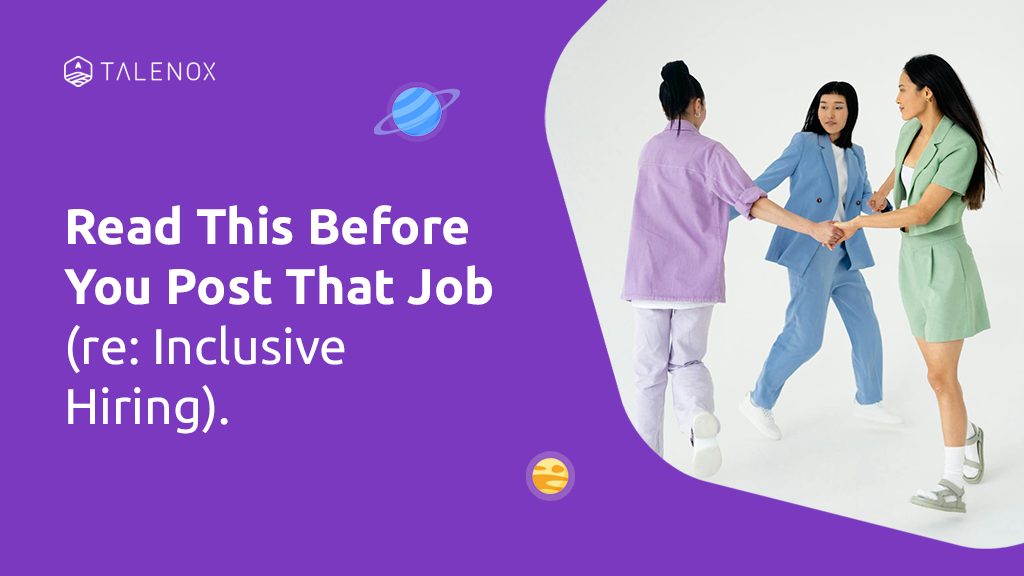
Inclusive hiring doesn’t have to be a 100-slide training deck. At its core, it’s just making sure people with different brains and backstories get a fair shot--and can thrive once they’re in.
We’ve all read job ads that feel like they were written by AI. Or sat in interviews where over-confidence (or “fluff”) gets mistaken for competence. Maybe it’s time we hit the refresh button.
Here are some reflective questions for you:
- Is your job post secretly looking for a unicorn--10 years of experience, three degrees, and a willingness to work weekends… for an entry-level role/salary?
- Are you assessing actual job skills--or just seeing who can charm their way through the interview?
- Is there a clear onboarding plan--or are new hires left to read the company Google Drive or Slack channels like it’s an ancient scroll?
- Are you (maybe subconsciously) hiring based on whether someone can hold their drink at team events or play pickleball with the rest of the crew?
No shame here. Just some food for thought to help us grow and do better.
Let’s Get Real…
Picture this: someone takes a beat before answering your question in an interview. They prefer writing things down instead of talking it out. Is that a red flag--or just a different way of showing up?
Or what about a teammate who’s at their best with structure and routine--but struggles when plans change last minute. Are they being “difficult,” or are we just not tuned into their rhythm?
It’s not about fixing people. It’s about creating flexible systems so more people feel like they belong.
Can HR Tools Actually Help? (No Gatekeeping)
Let’s be practical--good intentions only get you so far without the right systems in place.
When your HR tools bring clarity and structure, people feel less lost and more supported. That kind of foundation builds real trust--and better work naturally follows.
Here are a few practical wins:
- Clear onboarding flows (so no one spends week one decoding acronyms in your employee handbook)
- Well-defined roles and expectations (think: job descriptions that are more specific, not generic)
- Leave policies with some flexibility built in (custom leave types, anyone?)
- Performance reviews based on real impact--not just who’s the loudest in meetings (OKRs instead of KPIs, intangible performance factors, identifying the “true team players”, etc)
Tools like Talenox are built with this in mind. HR managers can easily customise leave policies to accommodate different employee needs, set up automated reminders for work anniversaries, upload and store important documents in one place, and streamline process flows like expense claims. These aren’t just nice-to-haves--they’re baseline features that can make a huge difference in whether someone feels supported from day one.
Whether you’re hiring new team members or managing a growing one, a clean, user-friendly HR system can be the quiet MVP behind your people strategy.
Here are some other tools worth checking out (we like them):
- Notion for centralised onboarding docs and internal comms
- Slack (when used thoughtfully) for async-friendly communication
- Typeform or Google Forms for gathering anonymous feedback
Rethinking “Culture Fit”
You’ve heard it: “They just weren’t a culture fit.” Sounds harmless, right? But low-key, it can be a way of saying, “They didn’t vibe like us.” And that’s where we miss out.
What if instead we asked: What new perspective could they bring? Could this person be the plot twist our team needs?
Growth doesn’t always feel comfortable. And that’s kind of the point.
A Workplace That Feels Like Belonging
This isn’t about being perfect. It’s about being intentional.
As we reflect on World Autism Awareness Day, let’s stop pretending inclusion is only about policies. It’s also in the group chats, the onboarding guides, and the way feedback is shared.
If you’re in a position to shape hiring--even just a little--you’ve got influence. Use it well.
Ask yourself:
- Do we create space for different kinds of thinkers?
- Do we practice empathy when hiring?
- Do our systems reflect the people we say we want to hire?
My advice?
Start small. But start.
TL;DR (But Actually…)
Okay, so here’s the lowdown: you don’t need a huge DEI budget or a five-year roadmap to start making your workplace more inclusive. You just need to care, notice what could be better, and make a few practical changes where you can.
Here are a few small but practical things you can do right now:
- Rewrite that job ad in human language--ditch the jargon and speak like a normal person, not a policy manual.
- Don’t side-eye someone for communicating differently. Not everyone processes or presents ideas the same way--and that’s a good thing.
- Build tools that support--not overwhelm--your people. Think clarity over complexity.
- Invite input from quieter team members too. If your meetings are dominated by the same voices, try mixing up the format--maybe a shared doc, a casual 1:1, or a quick poll.
- Rethink team activities. Not everyone loves EDM, collecting cards, or yoga at 7am on a Saturday. Create social spaces that don’t revolve around “fitting in” with a clique or a shared hobby.
- Gently check yourself or others when labels come flying. Whether it’s calling someone a “boomer” for not understanding something immediately, or assuming someone’s personality based on age, race, or orientation--it all adds up. A little awareness goes a long way.
Let’s build workplaces where folks don’t just “fit in,” but feel safe enough to stand out.
And if that means slowly letting go of a few outdated habits along the way--that’s okay too. Change doesn’t have to be big or loud to matter. Sometimes all it takes is a quiet shift in the right direction. You’ve got this.
Related posts:
![HR outsourcing Malaysia SME]()
Malaysian SME Growth Guide: When & How to Outsource Your HR (With Checklist)
18th Mar 2026![Singapore Budget 2026 SME Guide: Everything You Need to Know]()
Singapore Budget 2026 SME Guide: Everything You Need to Know
09th Mar 2026![employee appreciation day]()
Creative Ideas for Employee Rewards That Actually Work
02nd Mar 2026![Talenox Q4 2025 Product Updates: Built for a Smoother 2026]()
Talenox Q4 2025 Product Updates: Built for a Smoother 2026
27th Feb 2026![paternity leave shared parental leave singapore]()
2026 Update: What Changed for Paternity & Parental Leave in Singapore?
26th Feb 2026![HR outsourcing for smart SMEs singapore]()
HR Outsourcing for Small Businesses in Singapore: The Smart SME's Guide (2026)
20th Feb 2026